Fixture Congestion's Role in Modifying Scoring Trends Across Major Professional Leagues
Written by Frankie Hansen · Oct 5, 2026
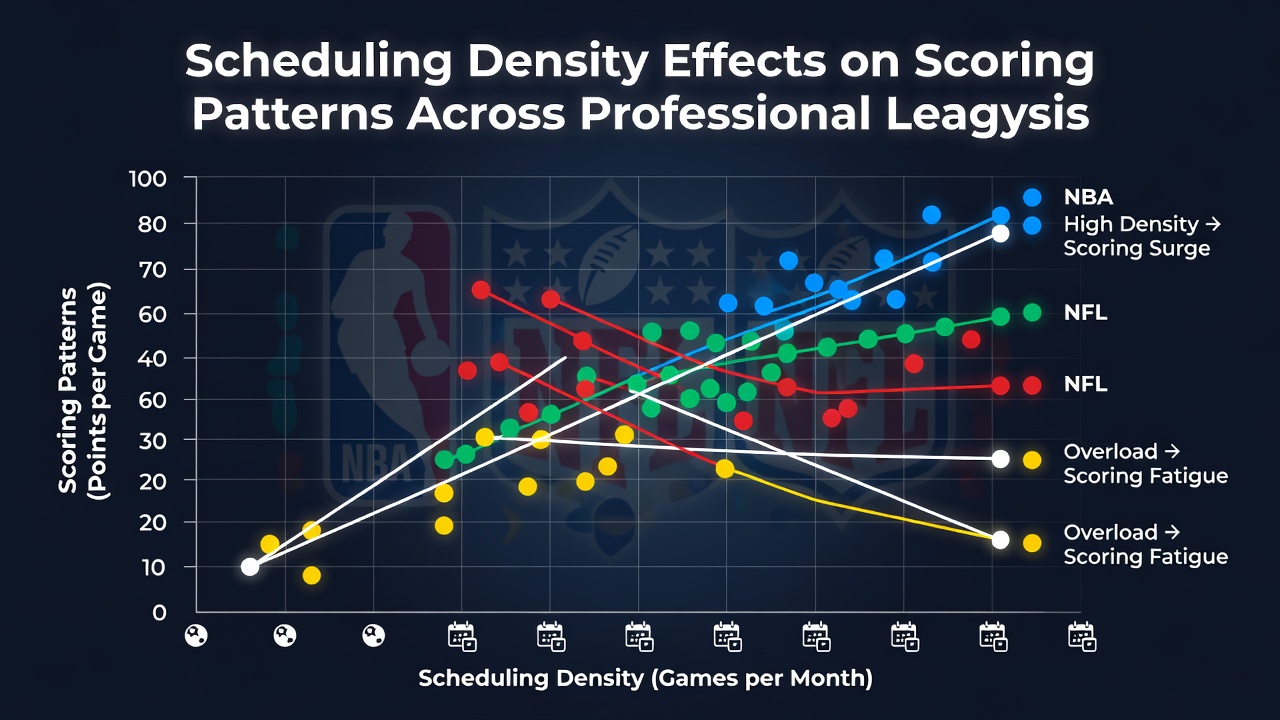
Fixture Congestion's Role in Modifying Scoring Trends Across Major Professional Leagues
Professional leagues worldwide pack multiple competitions into single seasons, which creates fixture congestion that alters how teams perform on the field and court. Data from various sports governing bodies shows that dense schedules often correlate with measurable drops in scoring output during periods of high match frequency, particularly when teams face three or more games within a seven-day window. Researchers tracking European football competitions have documented consistent patterns where goal tallies decline by an average of 0.4 per match under these conditions, while similar analyses in basketball leagues reveal point totals falling by 6 to 9 points in back-to-back games.
Patterns Observed in Football Competitions
European domestic leagues combined with continental tournaments produce some of the most pronounced examples of scheduling pressure. Teams advancing deep into events like the UEFA Champions League frequently encounter midweek fixtures that compress recovery time, and records compiled through 2025 indicate that such clubs post fewer goals in subsequent domestic matches. The effect appears most noticeable in away fixtures, where travel compounds physical demands, leading to reduced shot accuracy and lower conversion rates on attempts. Australian researchers examining A-League schedules during overlapping international breaks found parallel trends, with total goals per game decreasing notably when squads rotated minimally between commitments.
Basketball and Condensed Calendars
North American basketball provides another clear case study, as NBA teams routinely navigate stretches of four games in five nights during winter months. League statistics released ahead of the 2025-2026 season demonstrate that scoring efficiency dips measurably in the second game of back-to-backs, with field goal percentages declining across both conference alignments. Observers note that the reduction stems from increased turnovers and fewer fast-break opportunities rather than defensive adjustments alone. Canadian university studies on player workload have linked these outcomes to accumulated fatigue markers, showing that even elite athletes exhibit slower reaction times after repeated high-intensity efforts without adequate rest intervals.
Baseball's extended regular season offers a contrasting perspective, where the 162-game structure allows teams to distribute playing time more evenly yet still produces measurable scoring fluctuations during September pennant races. When clubs play seven games over six days, run totals per contest tend to rise slightly due to bullpen fatigue and diminished pitching command, according to data aggregated by Major League Baseball analytics departments. This stands in contrast to the lower-output patterns seen in sports with shorter recovery windows.
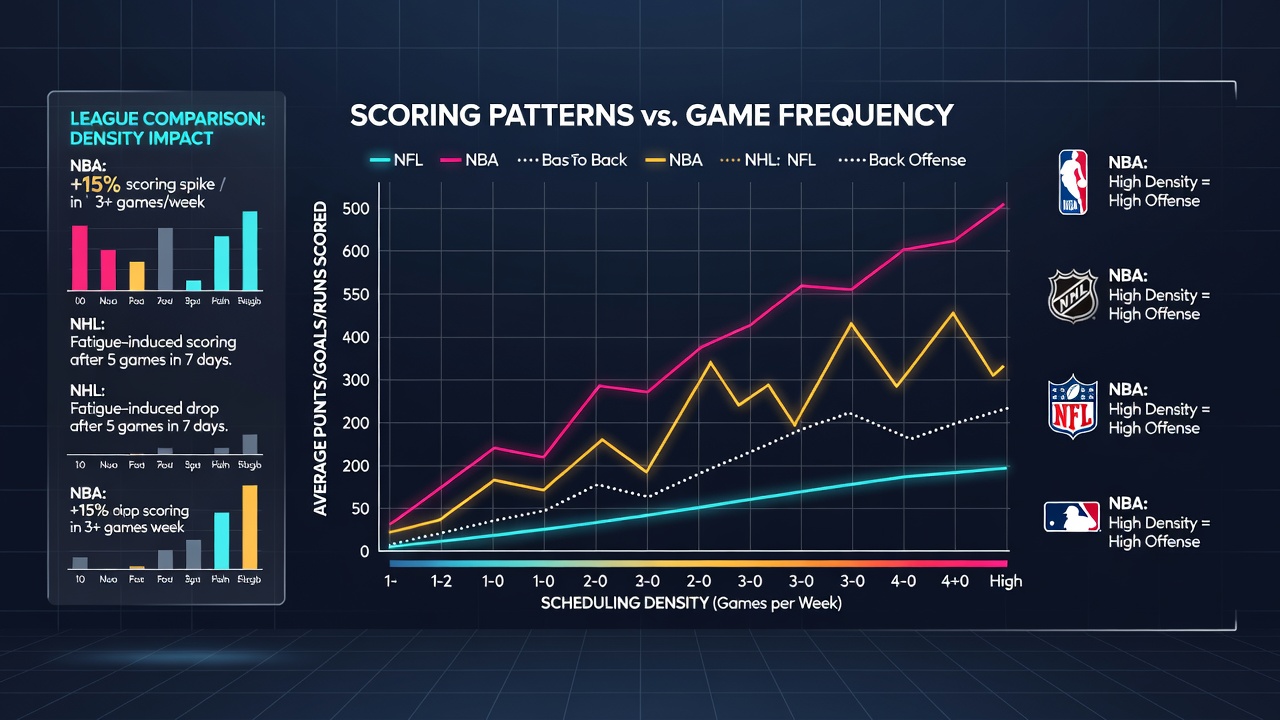
Cross-Sport Comparisons and Recovery Factors
Comparative research across disciplines highlights how sport-specific demands interact with schedule density. Rugby union competitions in the southern hemisphere, including Super Rugby Pacific, display reduced try counts during congested periods, while ice hockey leagues in Europe report similar declines in goals when teams play multiple games on consecutive nights. A 2024 report issued by the Australian Institute of Sport examined workload monitoring across several codes and concluded that neuromuscular fatigue accumulates faster in invasion sports, directly influencing offensive execution metrics. Recovery protocols such as cryotherapy and tailored nutrition have shown partial mitigation in controlled trials, yet complete restoration of baseline performance levels remains elusive when rest periods fall below 48 hours.
Implications for October 2026 Scheduling Windows
Looking ahead to October 2026, several leagues face overlapping domestic and international calendars that will test these established patterns once more. Football federations across South America and Europe have already published preliminary fixture lists indicating clusters of matches around national team windows, which historically coincide with suppressed scoring in club competitions. Basketball schedules in Asia and North America similarly feature early-season tournaments that extend game counts for participating franchises. Those tracking league data anticipate that advanced metrics on possession value and expected goals will continue to reflect these pressures, providing ongoing evidence of how calendar density shapes on-field outcomes without requiring subjective interpretation.
Conclusion
Evidence gathered from multiple professional leagues demonstrates that scheduling density reliably influences scoring patterns, with effects varying by sport yet consistently tied to recovery intervals and physical demands. Continued monitoring by academic and league researchers will refine understanding of these relationships as calendars evolve through 2026 and beyond.